Showing posts with label migration. Show all posts

Wednesday, August 5, 2009

Refugees Risk Sovereignty

At the Pacific Island Forum, Australia's Prime Minister Kevin Rudd was asked if Australia would be prepared to accept climate refugees from neighboring island nation states if climate change raises sea levels to render low lying islands inhospitable. His answer was telling:
‘Let’s be blunt about the order of priorities here. One is a set of actions agreed to by the international community which minimise the impact of coastal inundation as we minimise the impact of climate change but taking the mitigation measures that are outlined in the possible contents of a new framework agreement and the various national actions to be undertaken here in Australia.’'
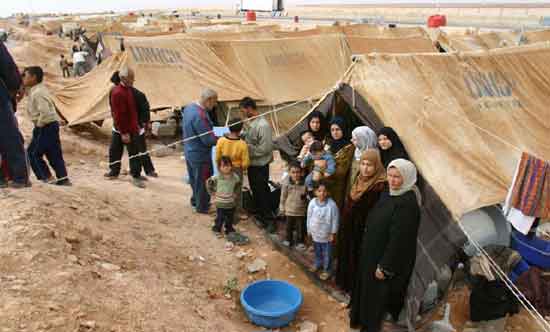
Rudd sidestepped the question. Refugees represent a threat to a nation's sovereignty because they undermine the control states have over their borders. Territorial integrity is one of the hallmarks of a sovereign nation. For Australia, controlling its borders are easier. It's an island; refugees from neighboring states such as Kiribati would have to arrive by boat with plenty of warning. However, in the Middle East, refugees created by environmental devastation could create security problems. The recently released Arab Development Report 2009 states:
Spreading drought, reduced water levels in rivers, stunted agricultural production and incursion by sea water will force large numbers of people to emigrate, turning millions of people, particularly in the Nile River Delta and coastal areas in the Arab Gulf, into “environmental refugees.” These developments could affect not only human security among communities, but national and regional security as well. Such severe changes may also affect political stability and increase domestic tension.
Already, Syria and Iraq face devastating water shortages. The region contains refugee camps in Palestine, disputed political sovereignty by the Kurds, and a war in Iraq. Refugees fleeing from drought ridden farm land would heighten these border disputes in an area beset with border integrity issues.

Monday, July 27, 2009

Institutional Adaptation

Adaptation measures for climate change should focus not only on infrastructure and renewable energy but also on developing institutions capable of dealing with climate induced stresses such as mass migration. Pacific island nations are among the most vulnerable to rising sea levels and some nations have considered relocating. Oxfam Australia's new report on climate induced migration in the Pacific predicts:

By the year 2050, about 75 million people could be forced to leave their homes in the Asia-Pacific region due to climate change. Pacific island governments are already tackling climate change-related relocation and resettlement. Given the significant implications of these population movements for our region, it is vital that Australia and New Zealand governments hold discussions with Pacific island governments about this issue now. Planning for climate displacement will require looking at the most effective ways to support Pacific islanders who are forced to move from their homes, including through appropriate immigration policies.

In the event of sudden climate change, such as floods and storms, a mass influx of refugees could destabilize neighboring countries. Conflict over climate stresses can occur if neighboring communities don't understand the causes of migration and if existing institutions aren't prepared for climate induced migration. Oxfam's report has good recommendations for policy makers to begin laying the groundwork for dramatic changes in future migrations due to climate change.

Governments must also work with local community leaders to educate citizens about climate refugees in areas where mass migrations are likely to occur. Conflict may not originate from states in these situations but from native citizens responding to an influx of migrants especially if neighboring states are already divided by ethnic or religious divides. International human rights law, while insufficient by itself to prevent conflict, must begin to recognize climate induced migrants as a separate category of people where their claims to migrate can be judged by international law. Otherwise, without any sort of legal recognition, people fleeing from environmental catastrophe have very limited legal claims under international law.

Wednesday, June 17, 2009

Climate Change and Security - Related News

There was a number of news reports today about the security-related aspects of climate change.

As Iraq runs dry, a plague of snakes is unleashed
The Independent reports that the Tigris and the Euphrates rivers are flowing through Iraq at significantly reduced levels since the war began, causing poisonous snakes to attack people and livestock. They report that "The total water reserves behind all Iraqi dams at the beginning of May was only 11 billion cubic metres, compared to over 40 billion three years ago." Unfortunately, the Independent misses the story -- that Iraqi agriculture is being desperately harmed by a lack of irrigation -- and focuses on snakes instead. This shortage is a symptom of a long-running dispute between Turkey and Iraq over the amount of water sent down these two rivers into what was once the Fertile Crescent.

Making the Case for Climate as a Migration Driver
The New York Times reports on a report from the United Nations, CARE International and Columbia University about how climate change will drive migration. The report focuses on areas like South Asia, Mexico, and Central Asia as potential sources of 'climate migrants.' According to the article, the report had originally referred to them as 'climate refugees', but that term was rejected because of legal imperatives to protect refugees. The report acknowledges that it is almost impossible to quantify who is a 'climate migrant' but does begin to put some numbers to the task.

UN warns of 'megadisasters' linked to climate change
UN Under Secretary General for Humanitarian Affairs John Holmes said that rapidly growing urban areas in the developing world combined with climate change creates a risk of 'megadisasters' stemming from floods, droughts, or storms. This statement was made at the release of the Red Cross' annual World Disaster Report. The report underscored that early warning of disasters is vital to saving lives. It went on to claim that climate change is "offering us the ultimate early warning" and that “The rising dangers of climate change require a response from governments equivalent to the one made to address the global financial crisis.”

Thursday, May 21, 2009

Review from New Security Beat

Geoff Dabelko at the New Security Beat has posted an informed and substantive summary and review of the Stimson Center's Troubled Waters: Climate Change, Hydropolitics, and Transboundary Resources. He's right to focus on this report, which was an interesting and informed summary of how water politics -- already an area of potential conflict -- is being complicated by climate change in South Asia.

This was an interesting report that was worth reading.

Thursday, March 5, 2009

Climate Migrants

Today, I was discussing the problem of climate-change related migration. It seems that many politicians and policy-makers point to migration as a key consequence of climate change. One of our recent posts was about the recent studies saying that 100 million, 250 million, or 1 billion people would become refugees because of climate change. Clearly, this is a big issue, and deserves much closer attention.

I was discussing these problems with Steffen Angenendt, an expert in migration policy from Berlin. He was saying that the problem of climate refugees must be strictly defined before we move further. People migrate for many reasons, and we must clearly delineate between refugees forced to move because of climate change, and people who are move for economic reasons, but happen to come from a warm climate. There is a danger that by simply labeling everybody as 'climate refugees' we water down the term. He suggested that climate refugees be defined only as those who come from areas affected by rising sea levels, and those affected by major, long term droughts.

Clearly, a challenge in this area is to create a new international regime for how to deal with climate refugees, akin to the 1951 Geneva Conventions on political refugees. He suggested three possible ways to adapt international law to deal with cross-border climate migrants:

1. Extend them the same status as political refugees.
2. Create a new regime as part of an International Climate Change Treaty
3. Muddle through with our current legal structure

Quick Analysis: (1) would seem likely to overwhelm the (already strained) system, (2) would take decades to develop an acceptable global regime, and (3) would seem likely to cause nations to figure out new ways to close their borders to any migrants.

Perhaps the best route would be to begin to negotiate on (2), while we create an international body that could develop a broad consensus for how to define 'climate refugees' by identifying global hot spots where the refugees could come from.